Hiking
With its numerous hiking trails, Saxon Switzerland invites you to embark on unforgettable journeys of discovery on foot – whether in the national park itself or in the surrounding landscape protection area. Here you will find both wide, well-maintained hiking trails and narrow, adventurous paths – and, as a special highlight of the rocky landscape, numerous stairs, ladders, steps and vantage points. A little scrambling is sometimes part of the fun!
To ensure that you are well prepared for your hiking tour, we have compiled valuable information to help you with your planning. Whether you are a beginner or an experienced hiker, there is a suitable route for every fitness level and every requirement.
Where would you like to go?
10 Wandertipps in der Nationalparkregion
Trekking

116 km long, the Malerweg hiking trail leads through the Elbe Sandsone Mountains. Stay comfortably in hotels, guesthouses or on campgrounds.

Want even more nature? The Forststeig is 105 km long and passes through the landscape protection area. It offers bivouac sites and trekking huts as accommodation options in addition to our Forststeig partners.
Trail markings & guideposts
Signage is the most important orientation aid in the Saxon Switzerland. The green signposts show destinations and trail names. They are supplemented by various trail markings. To help everyone find their way around, we explain the individual trail signs here.

Guideposts
Destinations are written in white, trail names in yellow. Distances are given in hours or minutes of walking time.

Trail markings (line or dot)
Blue indicates interregional, red regional, green and yellow local hiking routes.

Mountain path
Mountain paths are marked with a green triangle on grey background. They can be more difficult than normal hiking trails and require a certain surefootedness.

Climbing access
Climbing access paths are marked with a black triangle on white ground. These are not hiking paths but serve as access paths for climbers to the climbing sites.

Don't go beyond here!
A black X on white ground means the path is permanently closed so nature can recover. Even if a path is still visible, it may not be used.

Educational trail
The slanted green line is the sign for educational trails with information boards, for example the Flößersteig (timber rafting trail) in the Kirnitzschtal valley.

Long-distance trails
Some long-distance or international trails like the E3 or EB (Eisenach - Budapest) cross through Saxon Switzerland. These have their own trail signs.

Barrier
Some climbing access paths are divided from normal hiking trails by partially lowered barriers. If you're not a climber, please stay on the marked hiking trails to protect nature.
Special features of hiking in the national park
The Saxon Switzerland National Park attracts many visitors and, as a large protected area, is home to a unique flora and fauna. To ensure that everyone can continue to enjoy the beautiful landscape and nature in the future, a few special rules apply.

Access to the national park is only permitted on the existing paths. Paths may not be left. In the core zone, only marked or signposted paths or paths may be used.

Take your trash back to the next recycling bin, including tissues.

Smoking and any type of fire are prohibited. Campfires are only permitted at the designated fireplaces.

Always keep your dog on a leash. This protects local wildlife as well as your dog. Not all trails are suitable for dogs, please research before your trip.

Sleeping or camping in the national park is prohibited, this also includes sleeping in your caravan or car. The only exception is Boofen (bivouac under a rock overhang without a tent or tarp), which is only permitted from 16 June to 31 January, only for climbing and only in the official Boofen sites.
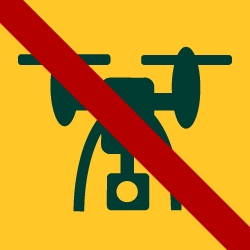
The use of drones or other aircraft is prohibited throughout the national park.
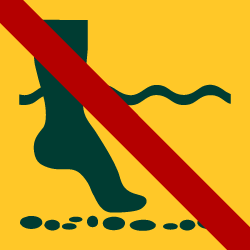
It is forbidden for people and animals to enter the water or swim in the national park.
Safe on trail

Anyone walking in the forest does so at their own risk. To help you better assess this risk, we have compiled some tips for you.

When deadwood collapses in the national park, it is not always possible to clear all paths promptly for health and safety reasons. These paths are temporarily declared impassable and should be avoided.

We provide an interactive map with temporarily closed or impassable trails as well as diversion options so you can plan your hike accordingly.
More hiking suggestions
Hiking suggestions on Outdooractive
Hiking suggestions on Komoot
Hiking suggestions from the tourism association