has a very long tradition and is immaterial cultural heritance. Learn more about climbing in the

Climbing

The Elbe Sandstone Mountains are considered the ‘cradle’ of free climbing and, with over 1,000 approved climbing peaks, are still a true paradise for climbers today. The special appeal of rock climbing as a form of mountaineering in its own right lies not only in the sporting challenge and self-discovery it offers, but above all in the intense experience of nature. It also offers the opportunity to become more aware of the need to protect nature.
Saxon Switzerland comprises a total of 13 climbing areas, stretching from Hinterhermsdorf in the east to the Ore Mountains border area in the west and from the town of Wehlen to the Bielatal valley. Here, numerous rocks with routes of varying difficulty await climbing enthusiasts. Those who have already conquered all the peaks of Saxon Switzerland can explore Bohemian Switzerland on the other side of the border.
Access paths & signs

Climbing access path
A black triangle on white background marks the climbing access paths. Please only use these official access paths.

Stop here!
The black X on white background means the path ends there and the area beyond is closed to protect nature.

Barrier
Some climbing access paths are divided from normal hiking trails by partially lowered barriers.
Special features of climbing in Saxon Switzerland
The Saxon Switzerland National Park region is home to unique flora and fauna. In order to preserve nature while still allowing climbing, a mountain sports concept for the national park and the adjacent landscape conservation area was developed in collaboration with the Saxon mountain sports associations, specifying the permitted climbing peaks. In addition, a few special rules apply to ensure that everyone can continue to enjoy the unique features of our beautiful landscape and nature in the future.

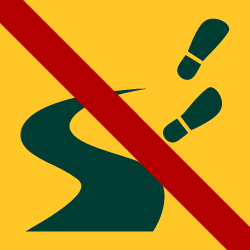
Throughout the national park, visitors are not permitted to leave the paths in order to protect animals and plants and prevent erosion damage. Therefore, please stay exclusively on the marked climbing access paths or those marked on the climbing maps. Please note: In the core zone of the national park, only marked paths or those indicated by signposts may be used.
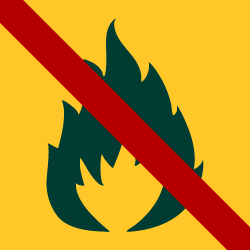
Smoking and any type of fire are prohibited. Campfires are only permitted at the designated fireplaces.

Take your trash back to the next recycling bin, including tissues.

In the national park, overnight stays are only permitted in connection with rock climbing in the 58 approved shelters ("Boofen") between 16 June and 31 January.

Some bird species that breed on cliffs can be significantly affected by disturbances – under unfavourable conditions, even a single disturbance can cause them to abandon their breeding site and result in no offspring. To protect these sensitive species, certain climbing peaks are closed during nesting season.
Saxon climbing rules
The traditional Saxon climbing rules apply in the Saxon Switzerland National Park region. Climbers agreed on and wrote down these rules over 100 years ago. The rules protect the rock and nature, but they also make Saxon rock climbing a special challenge that should not be underestimated. The Saxon climbing rules are also enshrined in the Saxon Switzerland National Park Region Ordinance as the basis for the long-term continuation of traditional climbing in the national park.

The most important rules are:
Climbing only on permitted peaks
There are 1,135 freestanding rocks in the national park region that are recognised as peaks and where climbing is permitted. Climbing is prohibited on the remaining massifs. Three massifs in the Steine area are an exception to this rule.
Climbing without chemical or mineral substances
The use of substances to increase friction on the rock, such as magnesia, is prohibited. These substances damage the rocks, impair their beauty and detract from the adventurous nature of climbing.
Climbing without artificial equipment
Safety equipment must not be used as handles or steps. It is also prohibited to attach artificial holding points or to use ladders, trees, blocks brought to the site, tree trunks or similar objects. Clamping wedges and devices must be made entirely of conventional textile sling material.
New ascents only from bottom up
First ascents may only be made from the entry point and must be completed to the summit. Abseiling down the planned route beforehand is also prohibited (unless the abseiling route runs above it).
Top rope waiver
Top rope climbing should be an absolute exception in sandstone climbing areas in order to prevent damage to the sandstone caused by rope friction. The rock must not be damaged by climbing. The standard practice for climbing in Saxony is to exit as a rope team at the summit.
Climbing only in dry conditions
It is forbidden to climb on wet or damp rock. Rock that has not dried out has a significantly lower breaking strength. Rock falls can permanently damage the character of climbing routes and pose a great danger to those climbing ahead and behind. Rocks must not be damaged.
Safe on trail

Anyone walking in the forest does so at their own risk. To help you better assess this risk, we have compiled some tips for you.

When deadwood collapses in the national park, it is not always possible to clear all paths promptly for health and safety reasons. These paths are temporarily declared impassable and should be avoided.

We provide an interactive map with temporarily closed or impassable trails as well as diversion options so you can plan your hike accordingly.